School lockers are bought against a deadline that cannot move. They have to be specified, manufactured, shipped and installed in the summer window, and if they arrive late the school opens with bags on the floor.
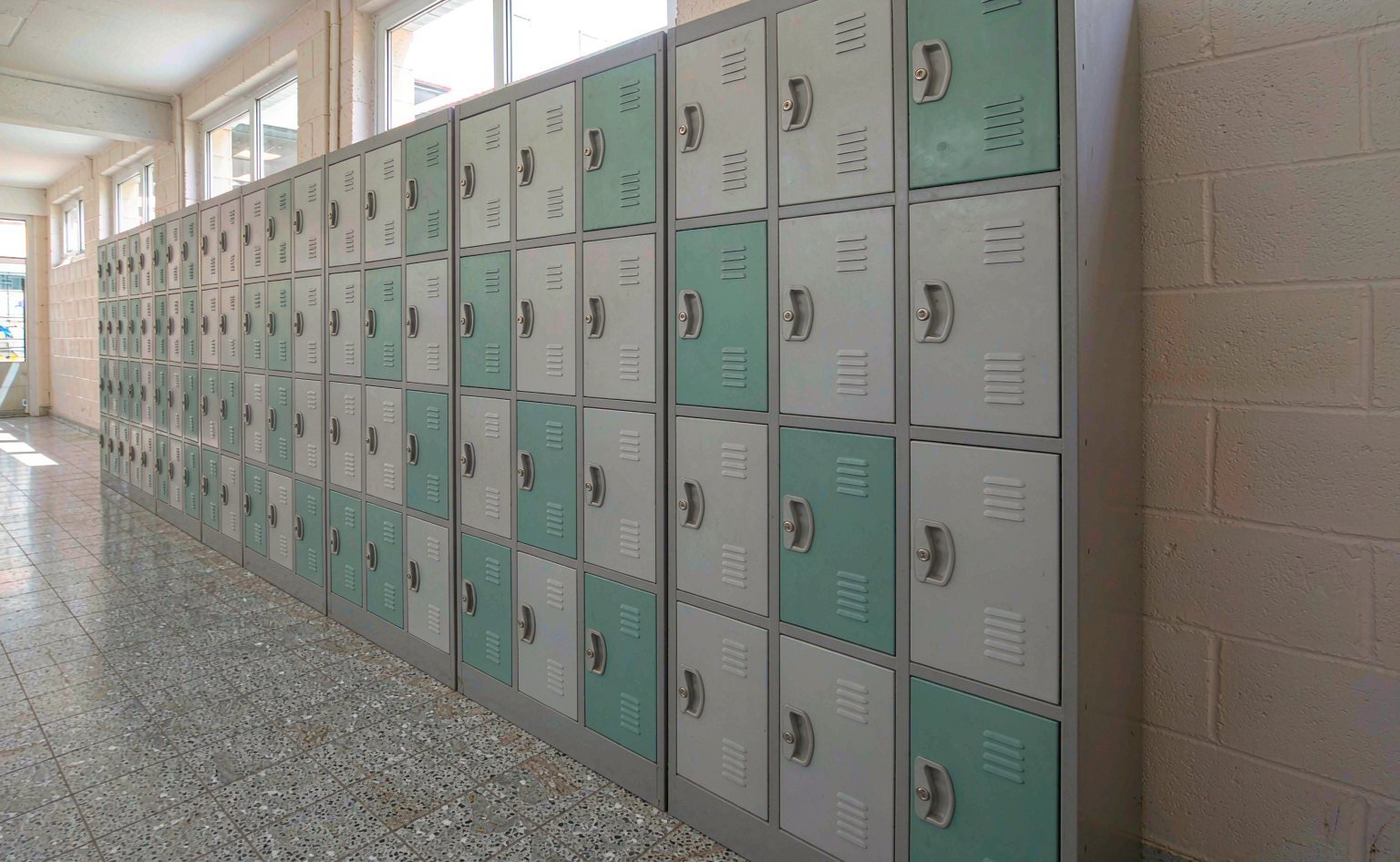
They also have to survive a decade of use by people who are, by definition, still learning to be careful with things.
Height tiers by year group
A locker that is ergonomically right for a 17-year-old is unusable for a 7-year-old. Height allocation is the single most common specification error in school projects — usually because one specification was issued for the whole building.
| Year group | Suggested locker height | Tier configuration | Notes |
|---|---|---|---|
| Primary / elementary (ages 5–11) | 1200–1400 mm | Single tier, low | Coat hook at child height; top surface reachable without climbing |
| Middle school (11–14) | 1500–1600 mm | Single or double tier | Transitional — check reach height against the tallest and shortest in the cohort |
| High school (14–18) | 1800 mm | Single or double tier | Full-height single tier where bags and sports kit are stored |
| Sixth form / college | 1800 mm | Single tier | Often specified with a shelf and a coat rail |
Where a corridor serves mixed year groups, mixed-height banks are the honest answer. Uniform 1800 mm banks in a primary school get used as climbing frames.
Safety details that matter more than appearance
- Anti-pinch door edges. Rolled or capped door edges, not raw sheet. This is the detail that produces injury reports.
- No exposed bolt ends inside the carcass. Fixings should not protrude into the storage space where a hand goes.
- Anti-tip anchoring. Every bank fixed to the wall. A 1,800 mm bank with the top doors open is front-heavy and a climbing risk.
- Rounded corners. On plinths, shelves and top rails in primary settings.
- Fire and egress. Lockers must not narrow a protected escape route below the required clear width. Confirm the clear corridor width with the fire officer before fixing the layout, not after delivery.
None of these cost meaningfully more to manufacture. They cost a great deal to retrofit.
Vandal resistance without going to prison grade
A school locker does not need 1.2 mm steel. It needs a specification that resists the actual abuse pattern: kicked doors, pried corners, marker graffiti, and the occasional determined attempt with a screwdriver.
| Risk | Specification response |
|---|---|
| Kicked or forced doors | 0.8 mm door, full-length hinge, internal door stiffener |
| Pried corners | Welded frame at panel joints rather than rivets; recessed lock |
| Graffiti | Anti-graffiti powder coating — cleanable with a solvent wipe without dulling the finish |
| Lock damage | Recessed cam lock with a hardened hasp; avoid protruding padlock hasps in corridors |
| Water ingress from wet kit | Louvers plus a ventilated base, so damp PE kit does not sit in a sealed box |
If a school has a specific history of break-ins in one building, say so. The right upgrade is usually a stronger lock and hinge on that bank, not heavier steel everywhere.
Colour as wayfinding
Colour-coding by year group or by department is free at manufacturing stage — the powder line runs whatever batch colour you specify. It reduces mis-loading, helps new students find their bank, and makes a long corridor legible.
Send RAL numbers if the school has a brand palette, or ask for a standard school range. Multi-colour orders are produced as one batch, so the shades stay consistent across the building.
Planning the summer installation window
The constraint is not manufacturing — 7–15 days is normal. The constraint is the calendar:
- Order by early spring. A June order for an August install competes with every other school in the same position.
- Confirm the drawing before term ends. Site measurements taken in a full corridor are often wrong. Measure in an empty room, or measure to the finished wall.
- Ship to arrive 2–3 weeks before the install date. Customs and port congestion do not respect term dates.
- Decide assembly on site versus pre-built. Flat-packed arrives denser and cheaper to freight; welded units install faster but cost more per unit in container space.
Related: staff lockers for the same campus, and standard specifications for the base product.
Frequently asked questions
Can you supply to a school’s own drawing?
Yes. Send a PDF or DXF and we quote against it. Custom dimensions carry no tooling fee at 50 units per specification.
Do lockers come with a master key system?
Yes. Key-alike and master-key suites are available. Specify the suite structure at order stage — keying cannot be reorganised after the cylinders are pinned.
What about ADA / accessibility requirements?
Provide a locker at accessible reach height with a usable approach clear of the door swing, and specify a lock operable with one hand without tight grasping. Tell us the standard that applies in your jurisdiction and we build to it.
How do schools handle lost keys?
Two practical options: a master suite so staff can open any locker, or a cam lock with a replaceable cylinder so a lost key means swapping the barrel rather than the door. Ask for spare cylinders with the order.
Can lockers be installed over a summer break?
Yes, if the order is placed early enough. Production is 7–15 days; the risk sits in freight and in site readiness, not in the factory.
Planning a school refit?
Send the corridor or room dimensions, the year groups served, and the install date you are working towards. We will tell you honestly whether the timeline is achievable. Request a quote.